SeaCat
Gallery
Overview
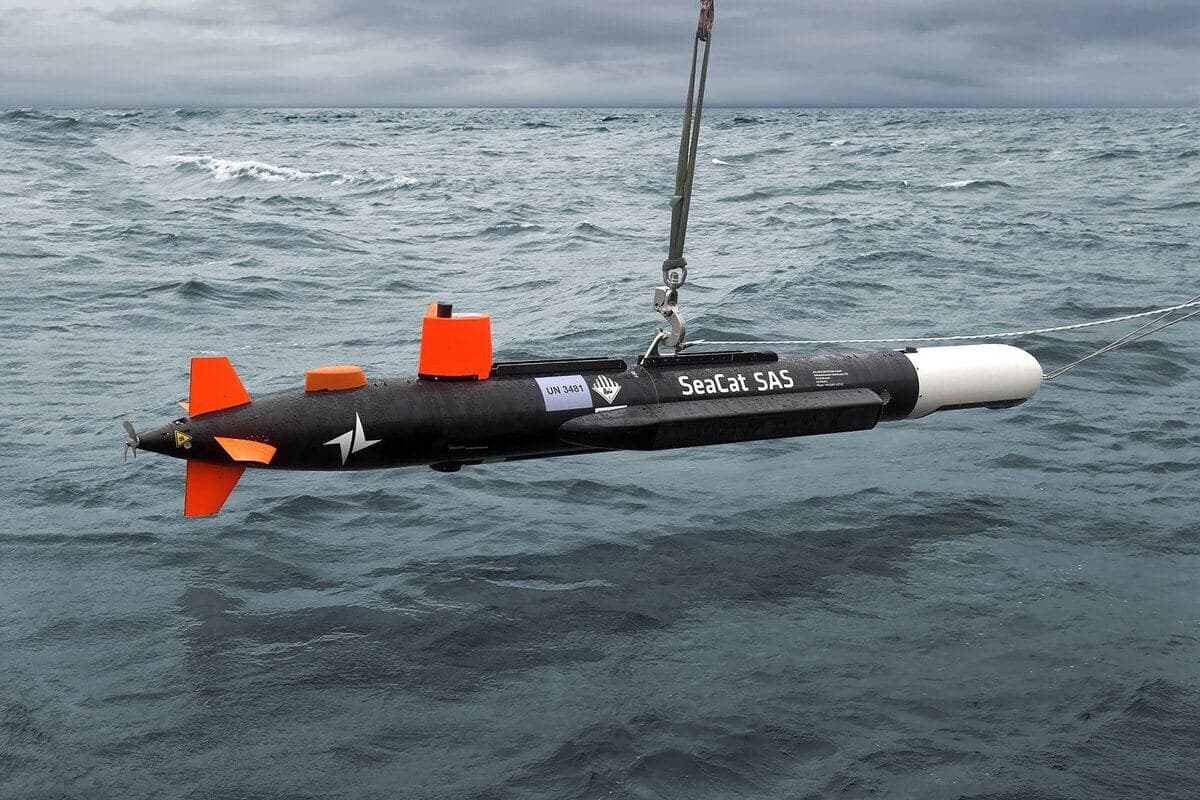
Atlas Elektronik's hybrid AUV/ROV with a swappable sensor head, used by the Royal Navy and German Navy for mine hunting.
SeaCat is a hybrid autonomous underwater vehicle from Germany's Atlas Elektronik that can also be flown as a tethered ROV. Its signature feature is the SwapHead, a nose section that can be exchanged in the field to carry synthetic aperture sonar, multibeam echosounders, sub-bottom profilers, or cameras, so one vehicle can hunt mines, survey harbours, or inspect infrastructure. Depending on configuration it is about 3 to 4.5 m long and works to 300-600 m for up to 10 hours, or 20 with an extra battery. The Royal Navy bought nine for its Mine Hunting Capability programme, and the German Navy is equipping its Frankenthal-class minehunters with SAS-equipped SeaCats.
Primary Roles
Notes
Lengths of about 3-4.5 m depending on configuration; the SAS mine-hunting version is about 4 m, 325 mm diameter, 400 kg, rated to 300 m, with 6-10 hours and more than 20 nm (recorded as 37 km) at 3 kn. The general SeaCat is rated to 600 m. Optional 1,000 m fibre tether for ROV mode. The Royal Navy ordered nine; the German Navy ordered four SAS units for Frankenthal-class minehunters.